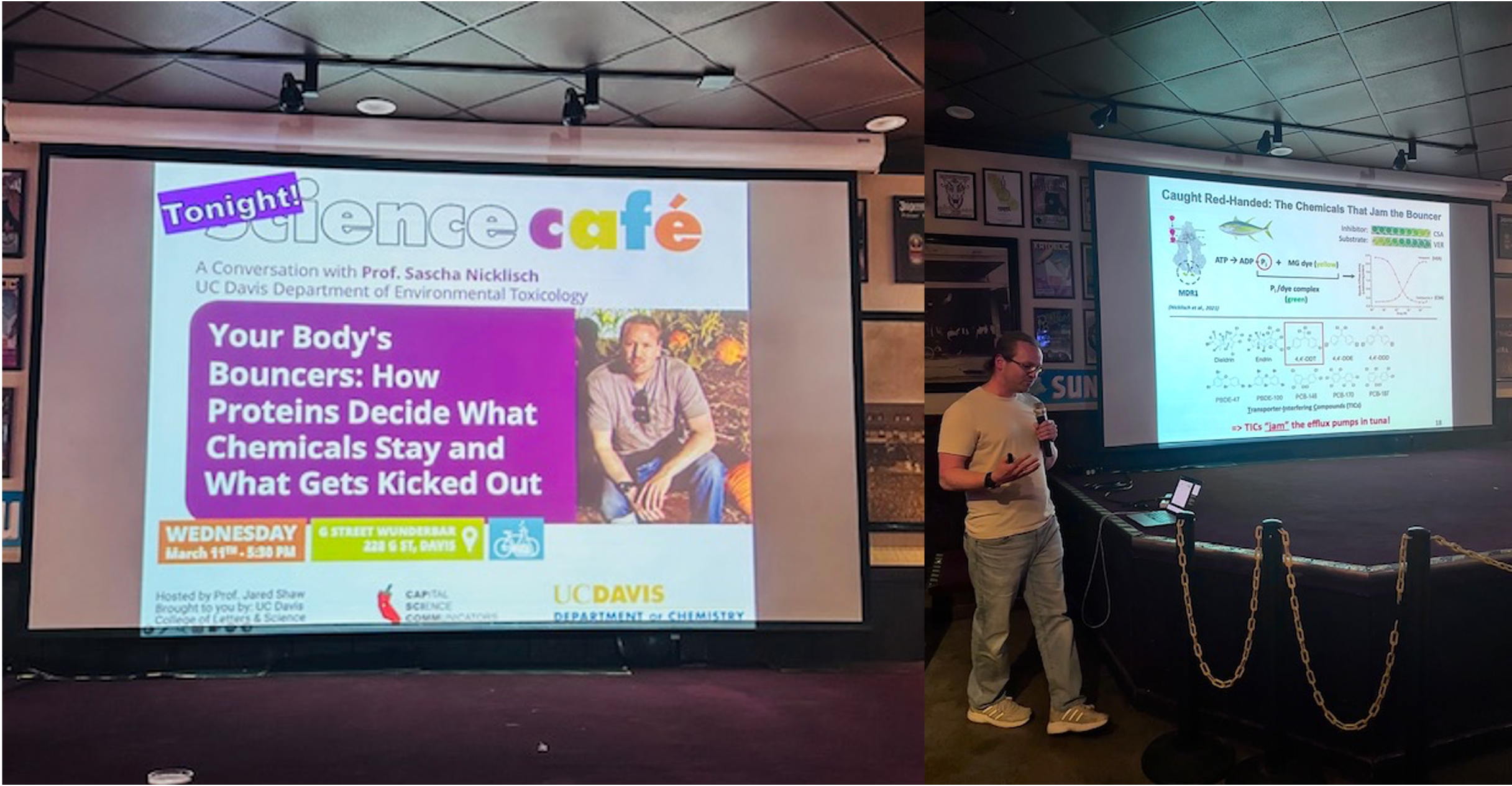
 Sascha presents the lab’s research at the Davis Science Cafe as the first faculty speaker from the Department of Environmental Toxicology in the event’s 12-year history. He explains how environmental toxicants like DDT evade the body’s cellular defense proteins by acting as “molecular distractors,” binding to protective transporter proteins and keeping them occupied so other harmful chemicals can slip into cells undetected. Also see: https://lettersandsciencemag.ucdavis.edu/science-technology/sneaking-past-bouncers.
Peers and Professors – 1st Gen Faculty-Student Mixer Brings Research to Life
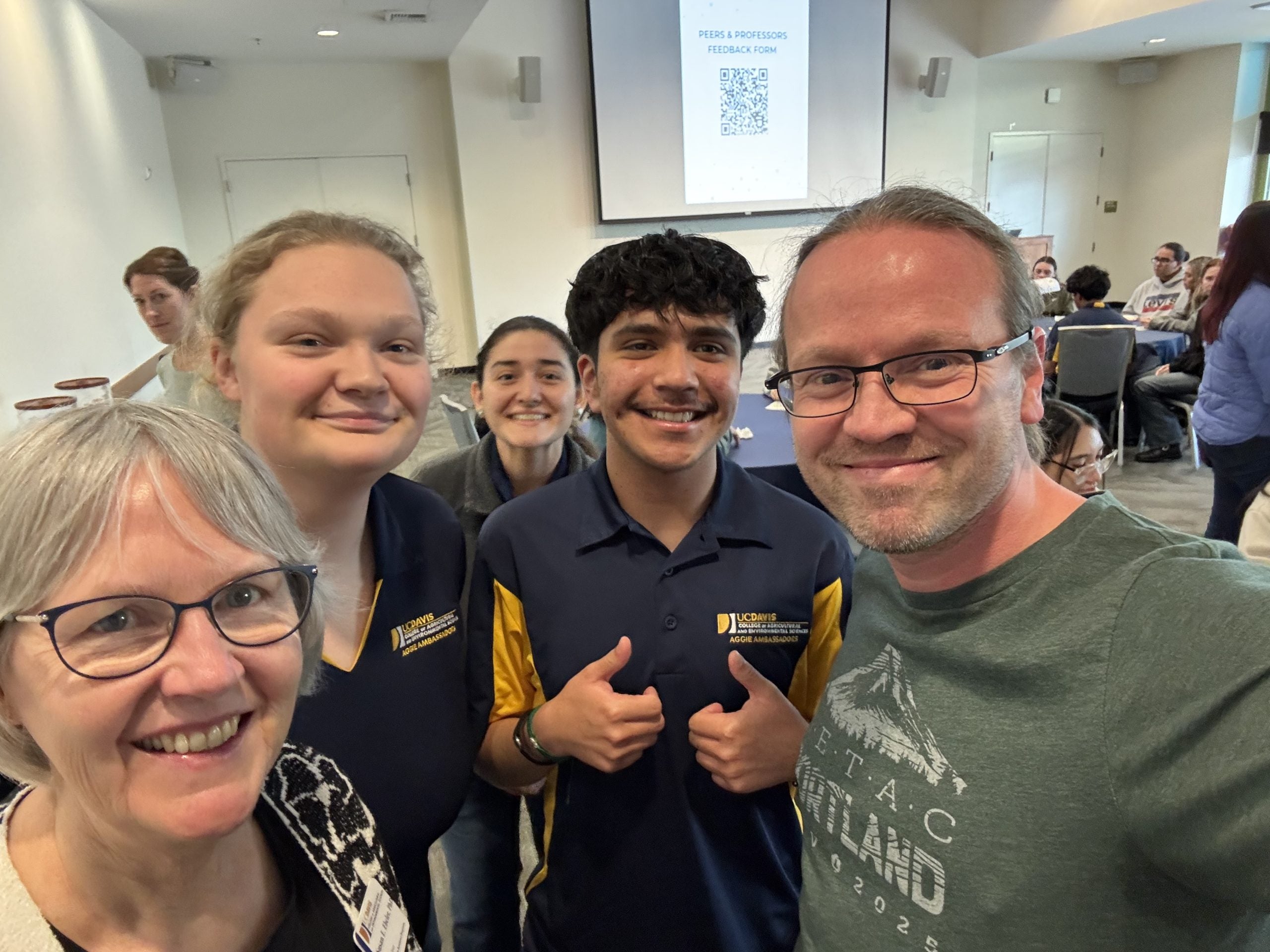
Sascha joined UC Davis’s Aggie Jumpstart and Aggie Ambassadors organizations for a student-faculty networking mixer at the Student Community Center, sharing insights on environmental toxicology research, career pathways, and personal advice with first-generation and low-income CAES students. The event brought faculty and students together in an informal roundtable setting designed to spark mentorship and open doors to new academic opportunities.
New paper is out – Helping Beekeepers Fight Mites Through More Effective Treatments

UC Davis Assistant Professor Sascha Nicklisch, left, and USDA-ARS research entomologist Julia Fine stand with bee hives. The duo partnered to investigate a treatment that targets varroa mites without harming honey bees.
Bees Undercover!
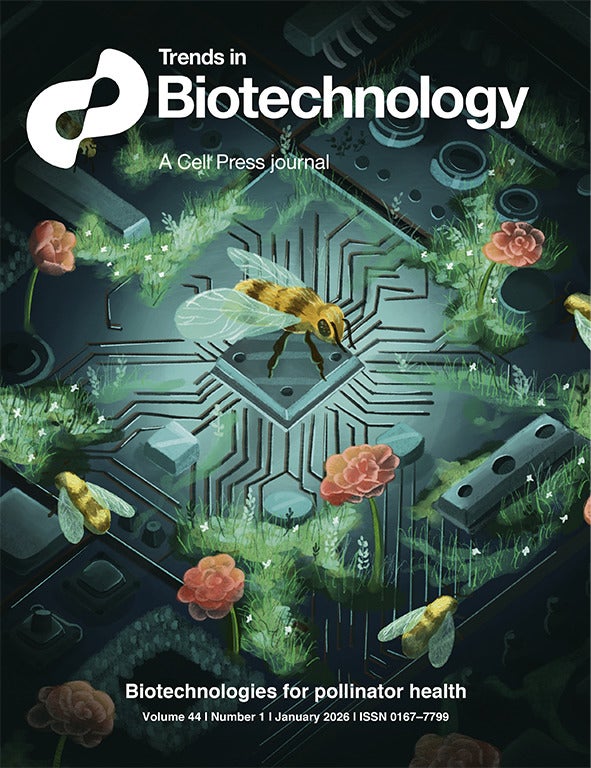
Cover page for Trends in Biotechnology – Bees are vital to global food security and biodiversity. On pages 111-127 of this issue (Volume 44, Issue I, Jan 2026), Vincent A. Ricigliano , Julia D. Fine , and Sascha C.T. Nicklisch discuss biotechnological solutions for improving bee health and mitigating bee population decline. Cover image from Justine Rideout, VI4 Artist-in-Residence Program. Find the full issue here!
Presenting our 10-year Research Synthesis at the SETAC Annual Meeting
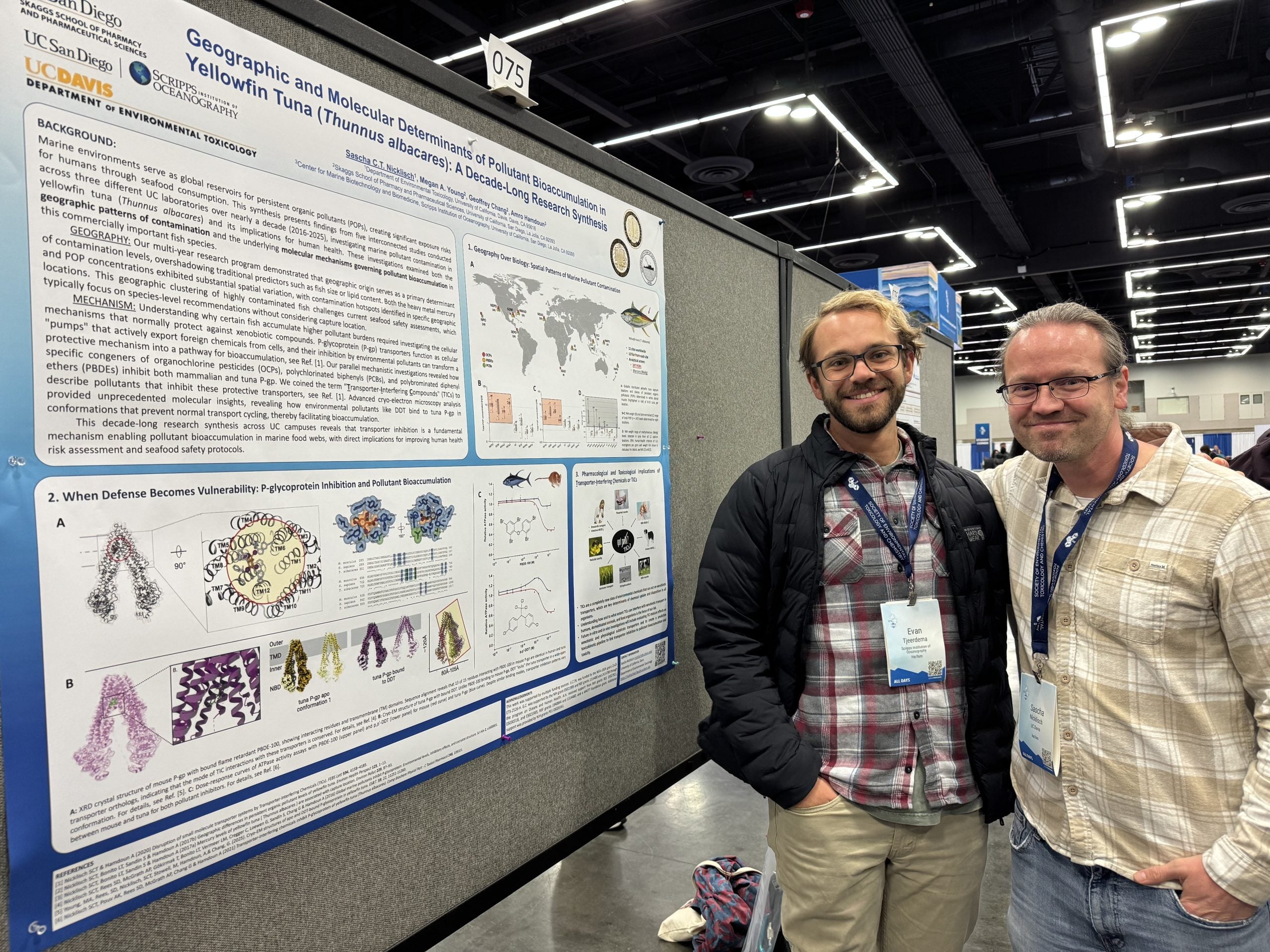 Sascha (right) mingling with colleagues (Evan Tjeerdema, left) and presenting a 10-year long research synthesis on the molecular mechanism underlying yellowfin tuna pollutant bioaccumulation at the SETAC North America 46th Annual Meeting. A collaborative projects between the Hamdoun lab (SIO/UCSD), the Change lab (UCSD), and the Nicklisch Lab (UCD).
Presenting at ESA 2025
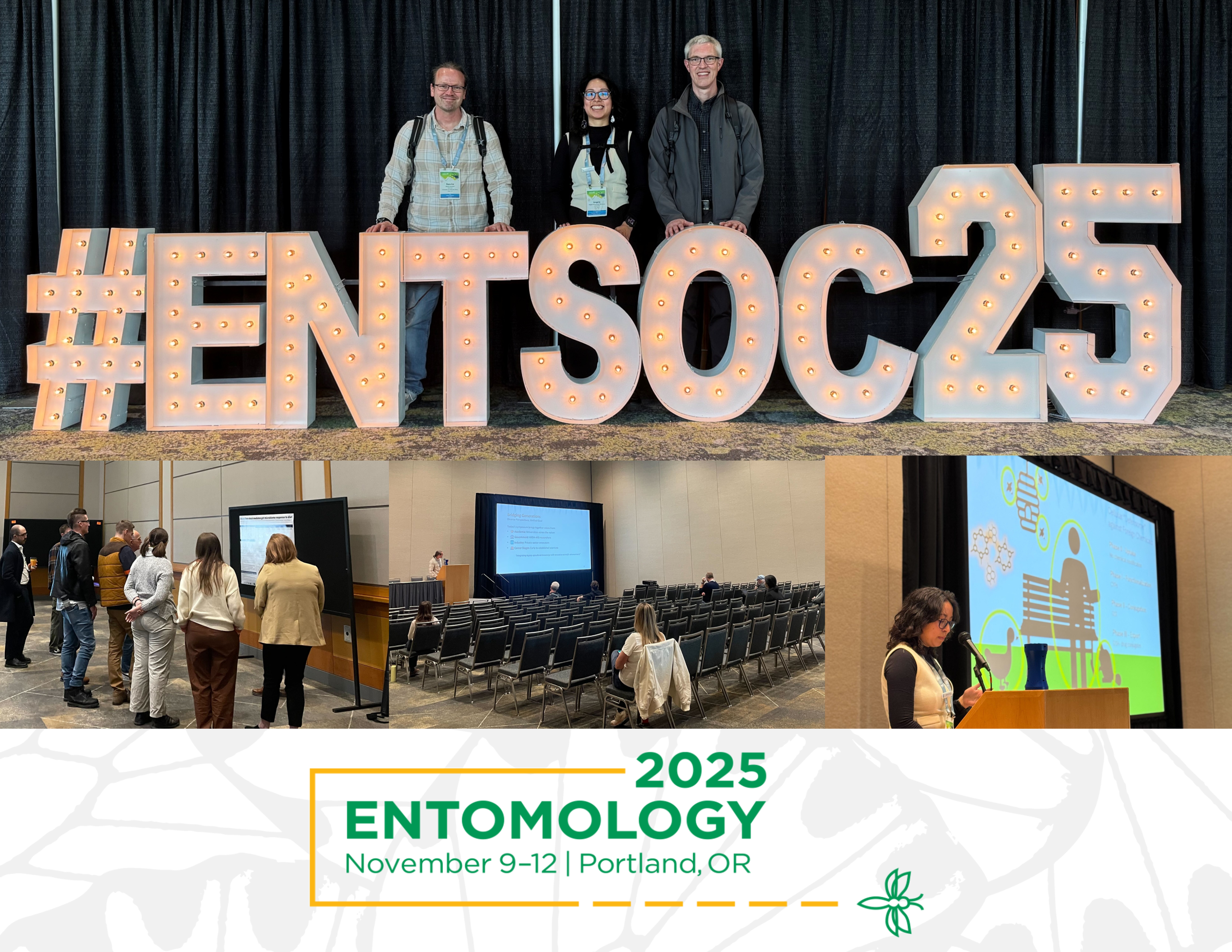
An enriching discussion on honey bee health research took place at the symposium “From the Bench to the Field: Emerging Technologies to Advance Honey Bee Health” part of the Entomological Society of America Annual Meeting in Portland, OR. The symposium was co-organized by Dr. Nicklisch, Dr. Fine, and Dr. Ricigliano; and hosted presentations from:
- Elena Gratton ( University of Illinois) – What can forensic methods tell us? Using non-lethal pathogen screens to identify bee pathogens.
- Professor Reed Johnson (The Ohio State University) – Are honey bee detoxicative cytochrome P450 genes different from other bees?
- Angela Encerrado (University of California, Davis) – Mapping the invisible: How advanced AMS technology reveals chemical communication and contamination pathways in bee colonies.
- Allyson Martin Ewert (Louisiana State University) – Honey bee stock mediates the gut microbiome response to diet.
¡We are the champions, my friends!

Congratulations to our Jastro & Shields award recipients!
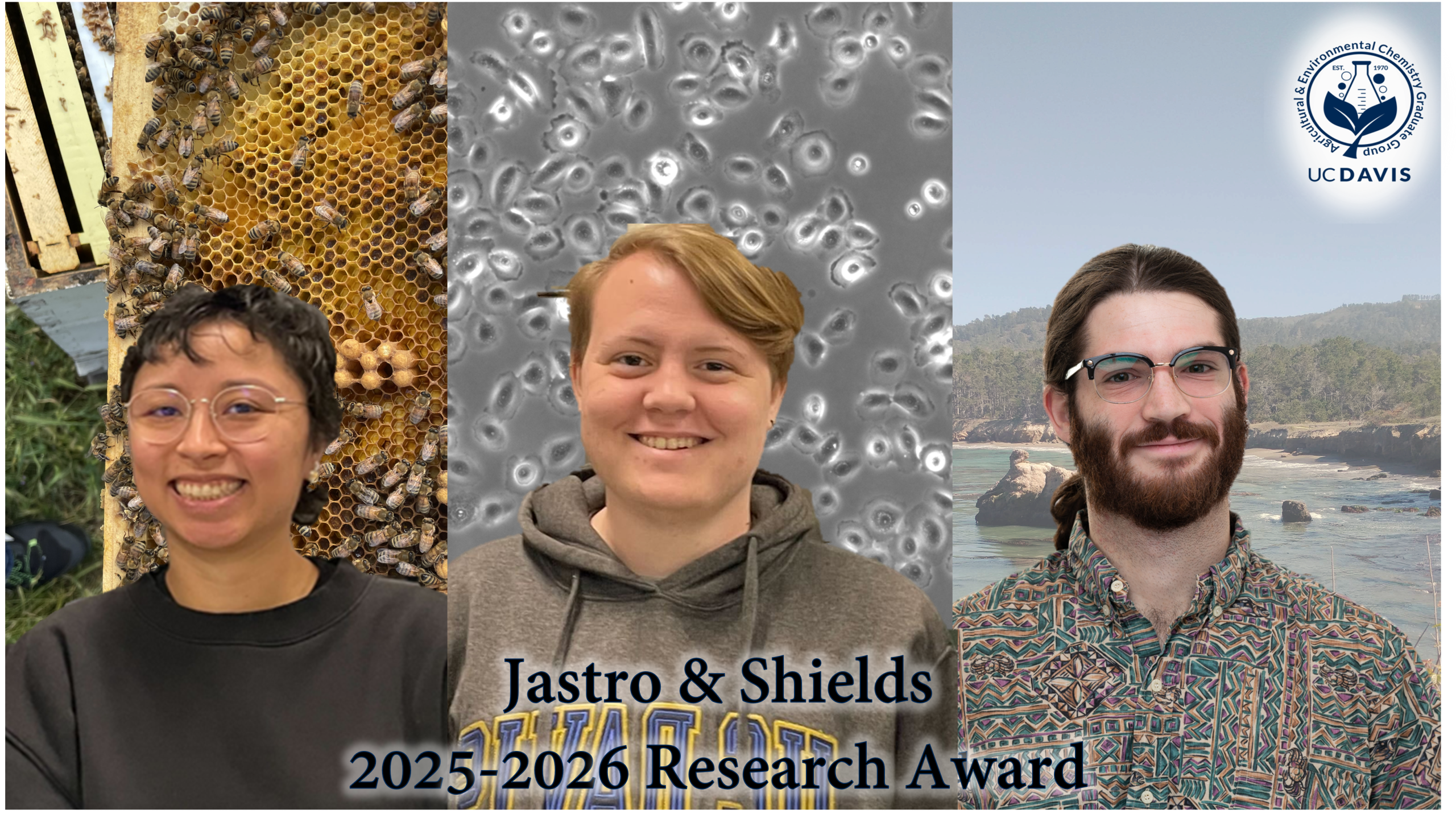
Three AgChem PhD students received the 2025-2026 Jastro-Shields fellowship award for their research proposals on:
Angela (left)- “Tracing Pesticide Flow in Honey Bee Colonies Using Accelerator Mass Spectrometry (AMS): Mapping Physical and Biological Hotspots”
Eli (middle)– “Mechanisms of Cellular Uptake and Toxicity of Inhaled Pollutant-Absorbed Nanoplastics”
Zeke (right)– “Determining the Extent to Which Microplastics have Infiltrated a Protected Marine Ecosystem”
Congrats Spyros – M.S. Graduate
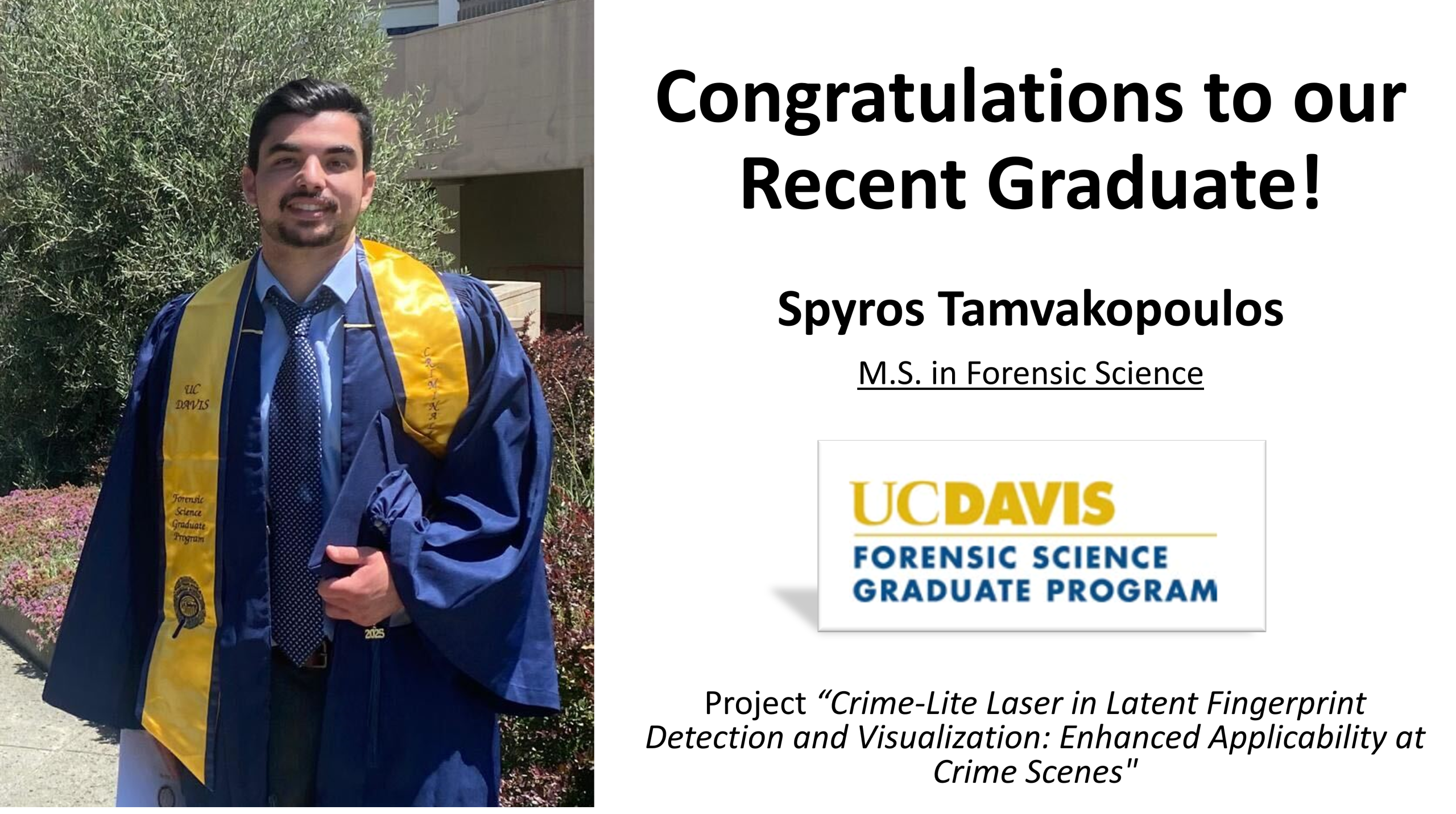
Spyros Tamvakopoulos graduated with a Master of Science from the Forensic Science Graduate Group. During his time at UCD Spyros worked on fingerprint detection and visualization in crime scenes.
All the best wishes in his future endeavors for M.S. Spyros Tamvakopoulos!
Spring 2025 Graduations
