The Nicklisch lab spent the afternoon in Sacramento, talking science, trying birria, and taking a moment to stop and smell the roses!

The Nicklisch lab spent the afternoon in Sacramento, talking science, trying birria, and taking a moment to stop and smell the roses!

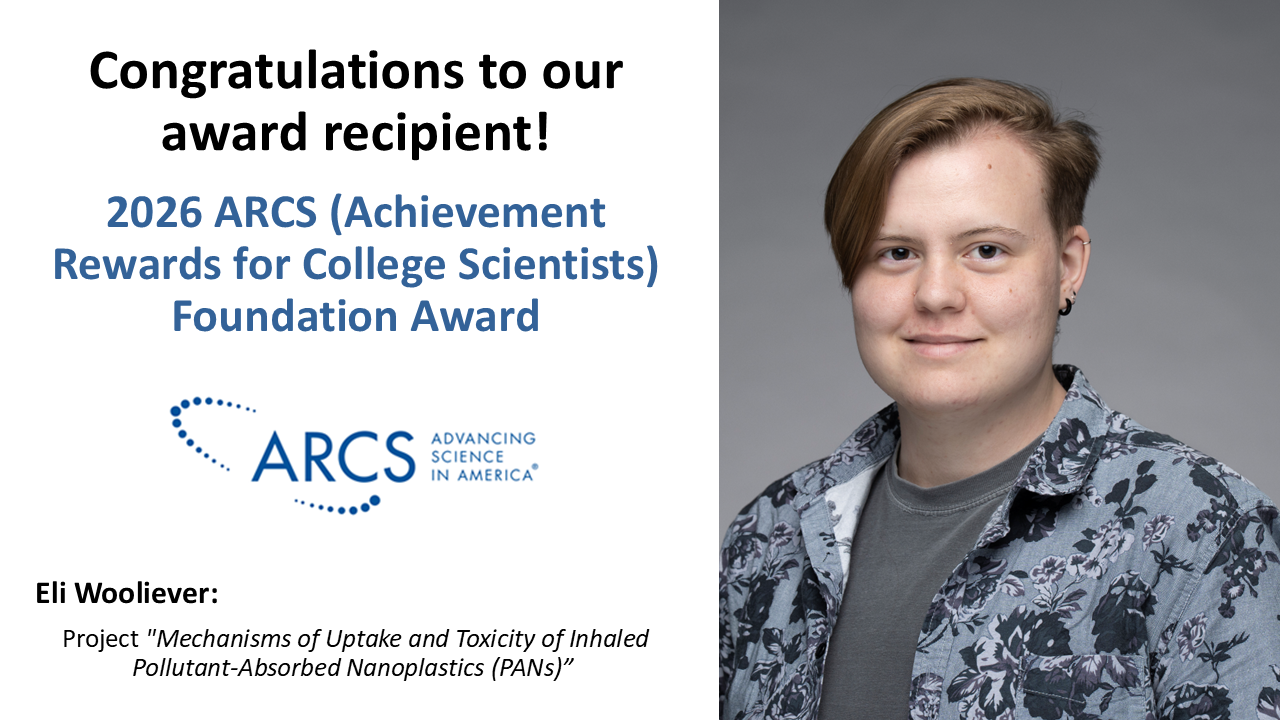
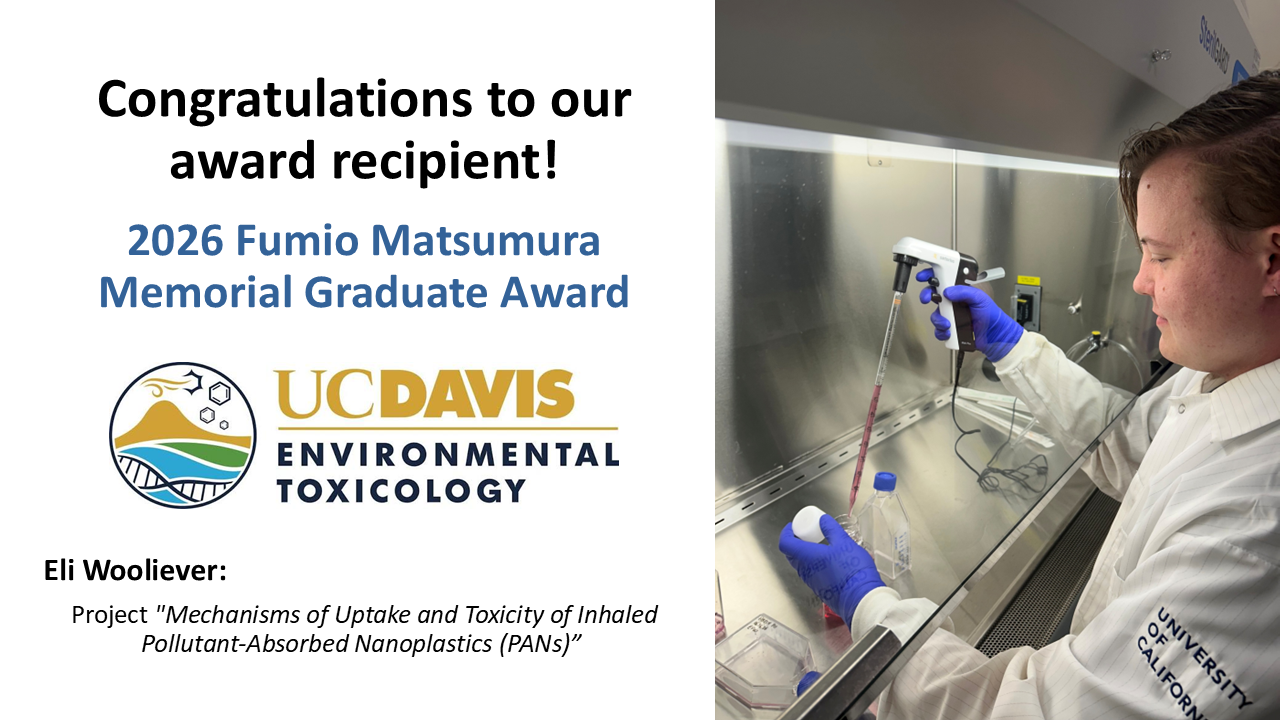
Eli received the Comparative Lung Biology and Medicine Training Grant (T32) from the National Institutes of Health. His proposal on “Mechanisms of Uptake and Toxicity of Inhaled Pollutant-Absorbed Nanoplastics (PANs)” was funded to conduct research in collaboration with the Carney lab for a second year.

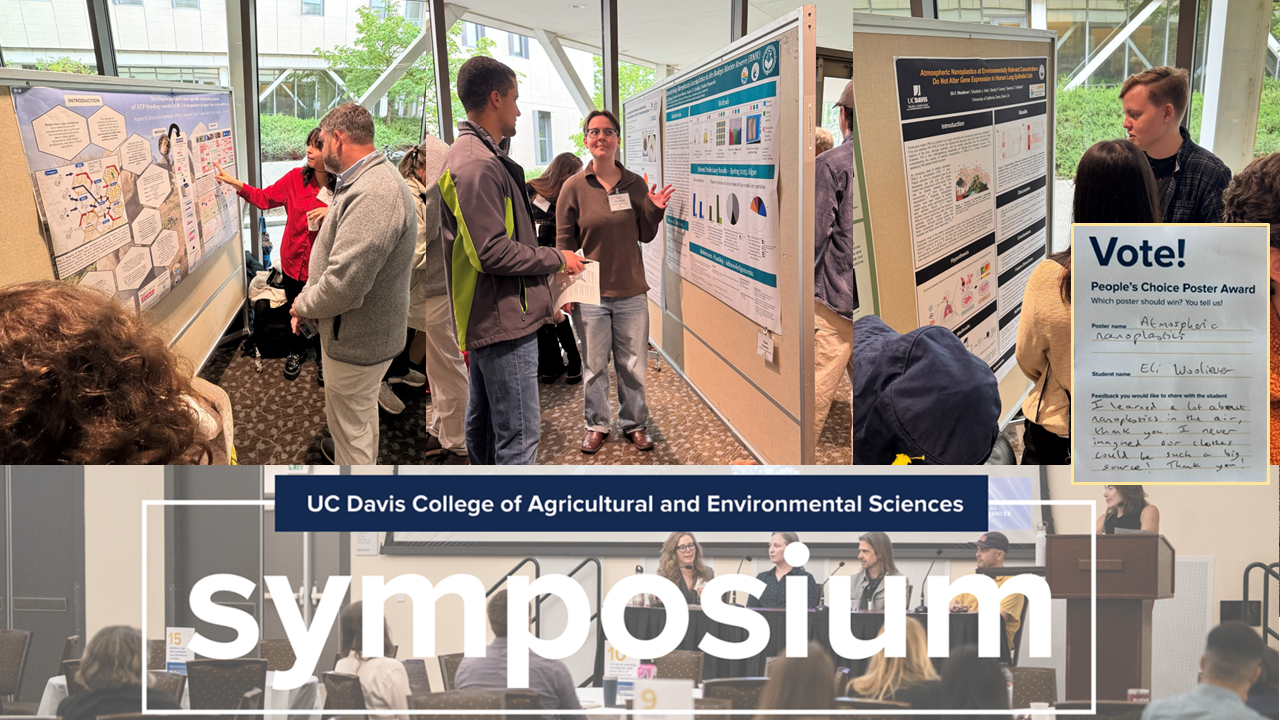
The Nicklisch lab presented posters on their latest research at the 3rd annual UC Davis College of Agricultural and Environmental Sciences Symposium, which included an engaging networking event for scientists across the college and industry.
Angela (left): “Developmental and caste-specific expression patterns of ATP-binding cassette (ABC) transporters in honey bees (Apis mellifera)”
Leo (middle): “Characterizing Microplastics Accumulation in the Bodega Marine Reserve (BMR)”
Eli (right): “Atmospheric Nanoplastics at Environmentally Relevant Concentrations Do Not Alter Gene Expression in Human Lung Epithelial Cells”

Eli Wooliever presented his poster on “Atmospheric Nanoplastics at Environmentally Relevant Concentrations Do Not Alter Gene Expression in Human Lung Epithelial Cells” at the 34th Annual Meeting of NorCal SETAC in Sacramento, CA.

Eli Wooliever presented his poster on “Genetic Expression Changes Induced by Atmospheric Nanoplastics in Human Lung Epithelia Reduced at Environmentally Relevant Concentrations” at SOT’s 65th Annual Meeting & ToxExpo in San Diego, CA.
Sascha presents the lab’s research at the Davis Science Cafe as the first faculty speaker from the Department of Environmental Toxicology in the event’s 12-year history. He explains how environmental toxicants like DDT evade the body’s cellular defense proteins by acting as “molecular distractors,” binding to protective transporter proteins and keeping them occupied so other harmful chemicals can slip into cells undetected. Also see: https://lettersandsciencemag.ucdavis.edu/science-technology/sneaking-past-bouncers.
Sascha joined UC Davis’s Aggie Jumpstart and Aggie Ambassadors organizations for a student-faculty networking mixer at the Student Community Center, sharing insights on environmental toxicology research, career pathways, and personal advice with first-generation and low-income CAES students. The event brought faculty and students together in an informal roundtable setting designed to spark mentorship and open doors to new academic opportunities.

UC Davis Assistant Professor Sascha Nicklisch, left, and USDA-ARS research entomologist Julia Fine stand with bee hives. The duo partnered to investigate a treatment that targets varroa mites without harming honey bees.
Cover page for Trends in Biotechnology – Bees are vital to global food security and biodiversity. On pages 111-127 of this issue (Volume 44, Issue I, Jan 2026), Vincent A. Ricigliano , Julia D. Fine , and Sascha C.T. Nicklisch discuss biotechnological solutions for improving bee health and mitigating bee population decline. Cover image from Justine Rideout, VI4 Artist-in-Residence Program. Find the full issue here!
Sascha (right) mingling with colleagues (Evan Tjeerdema, left) and presenting a 10-year long research synthesis on the molecular mechanism underlying yellowfin tuna pollutant bioaccumulation at the SETAC North America 46th Annual Meeting. A collaborative projects between the Hamdoun lab (SIO/UCSD), the Change lab (UCSD), and the Nicklisch Lab (UCD).