 On November 7, 2026, NanoTRACE held its first Spanish-language community event at the Woodland fire station, with Thriving Pink and UC Davis WeCARE. Prof. Laura Fejerman (UC Davis Public Health Sciences; Director, WeCARE) presented in Spanish on micro- and nanoplastics, breast health, and practical household swaps, with Sascha and Carney lab students hosting the hands-on swap tables.
Category Archives: Uncategorized
October CA&ES Aggie Hour talk about nanoplastics
 Sascha’s talk was the “Faculty Highlight” at this month’s CA&ES Aggie Hour, presenting our nanoplastics research to colleagues across the college. Nanoplastics are ~700× thinner than a hair and have been found in human blood, brain and placenta — but the hard part isn’t worrying about them, it’s measuring them. That’s the problem our lab is working on. Thanks to Dean Stokes and the CA&ES communications team for highlighting our research.
October Environmental Health Sciences Center Retreat – Complex Exposomes

Sascha was invited to speak and moderate the Complex Exposomes panel at the @UCDavis Environmental Health Sciences Center retreat. The talk was about why nanoplastics behave nothing like microplastics, how they carry pollutants into cells, and why measurement remains the bottleneck. Thanks to the EHSC for convening a conversation that connected mechanism, community, and regulation in one room.
2026 nanoTRACE: Educating Breast Cancer Survivors on Plastics in their Homes
 Randy Carney (Biomedical Engineering) and Sascha Nicklisch (Environmental Toxicology) at the first NanoTRACE community event, “Breast Cancer & Nanoplastics,” hosted with Thriving Pink and UC Davis WeCARE in Davis on October 10, 2026 — with Nicklisch Lab students staffing the hands-on kitchen and food swap table.
2026 Cannabis Analytics Safety & Health Symposium at ASU

Sascha is presenting the current research on P-glycoprotein interactions with Cannabinoids at the blood-brain barrier as invited speaker to the 2026 Cannabis Analytics Safety & Health Symposium at Arizona State University.
New Collaborative NIEHS R01 Grant: Standardizing Nanoplastic Neurotoxicity Measurement

Our lab (with the Carney Lab, Biomedical Engineering) has received a $4M NIEHS grant to develop the first standardized method for measuring the neurotoxicity of airborne nanoplastics. We’ll characterize how pollutant-adsorbed nanoplastics (PANs) — nanoplastics carrying pesticides, heavy metals, and PFAS — cross the blood-brain barrier and affect gene activity linked to inflammation and disease. Goal: a repeatable exposure-to-harm standard to inform future regulation. Link to News Brief.
Congratulations to Eli! – Matsumura Memorial Award
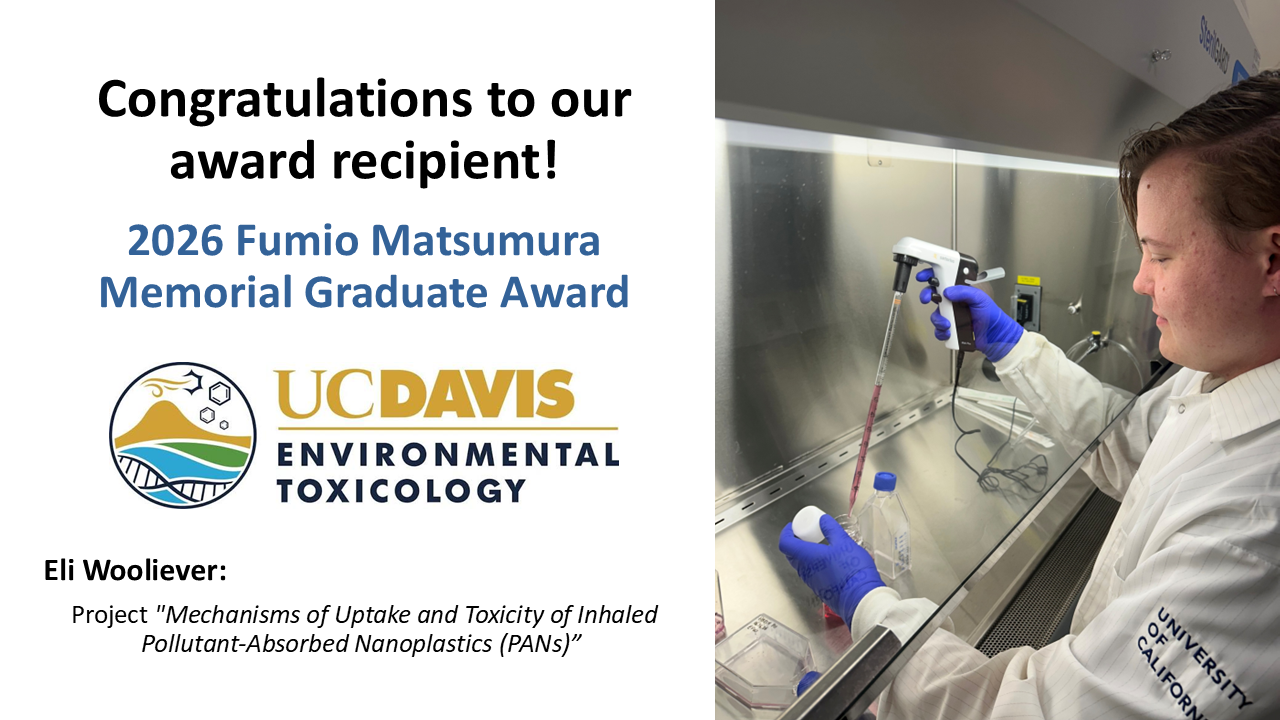
Eli received the 2026 ARCS (Achievement Rewards for College Scientists) Foundation Award for his proposal on “Mechanisms of Uptake and Toxicity of Inhaled Pollutant-Absorbed Nanoplastics (PANs)”!
Toxicology center-stage at Davis Science Café
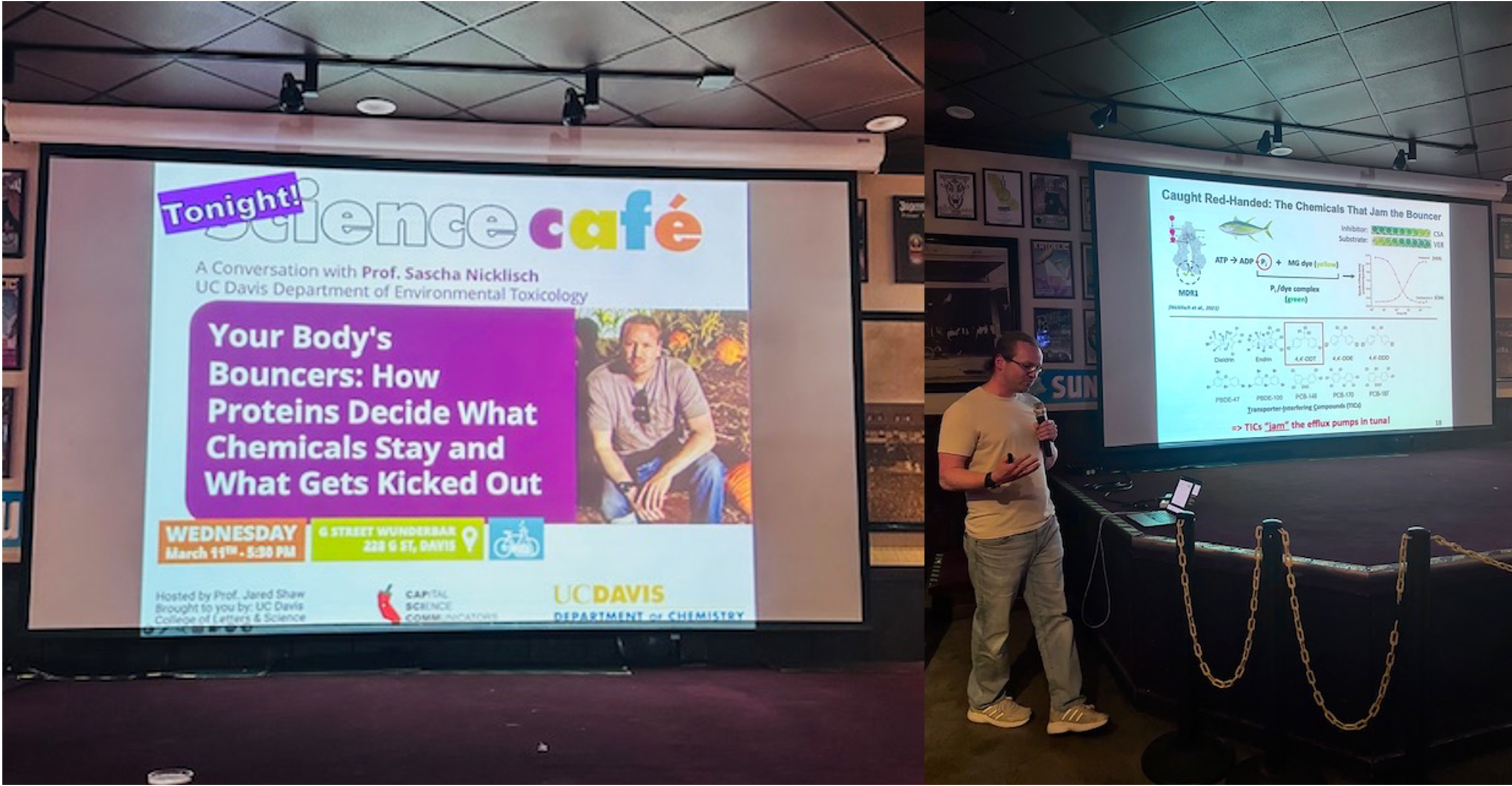 Sascha presents the lab’s research at the Davis Science Cafe as the first faculty speaker from the Department of Environmental Toxicology in the event’s 12-year history. He explains how environmental toxicants like DDT evade the body’s cellular defense proteins by acting as “molecular distractors,” binding to protective transporter proteins and keeping them occupied so other harmful chemicals can slip into cells undetected. Also see: https://lettersandsciencemag.ucdavis.edu/science-technology/sneaking-past-bouncers.
Peers and Professors – 1st Gen Faculty-Student Mixer Brings Research to Life
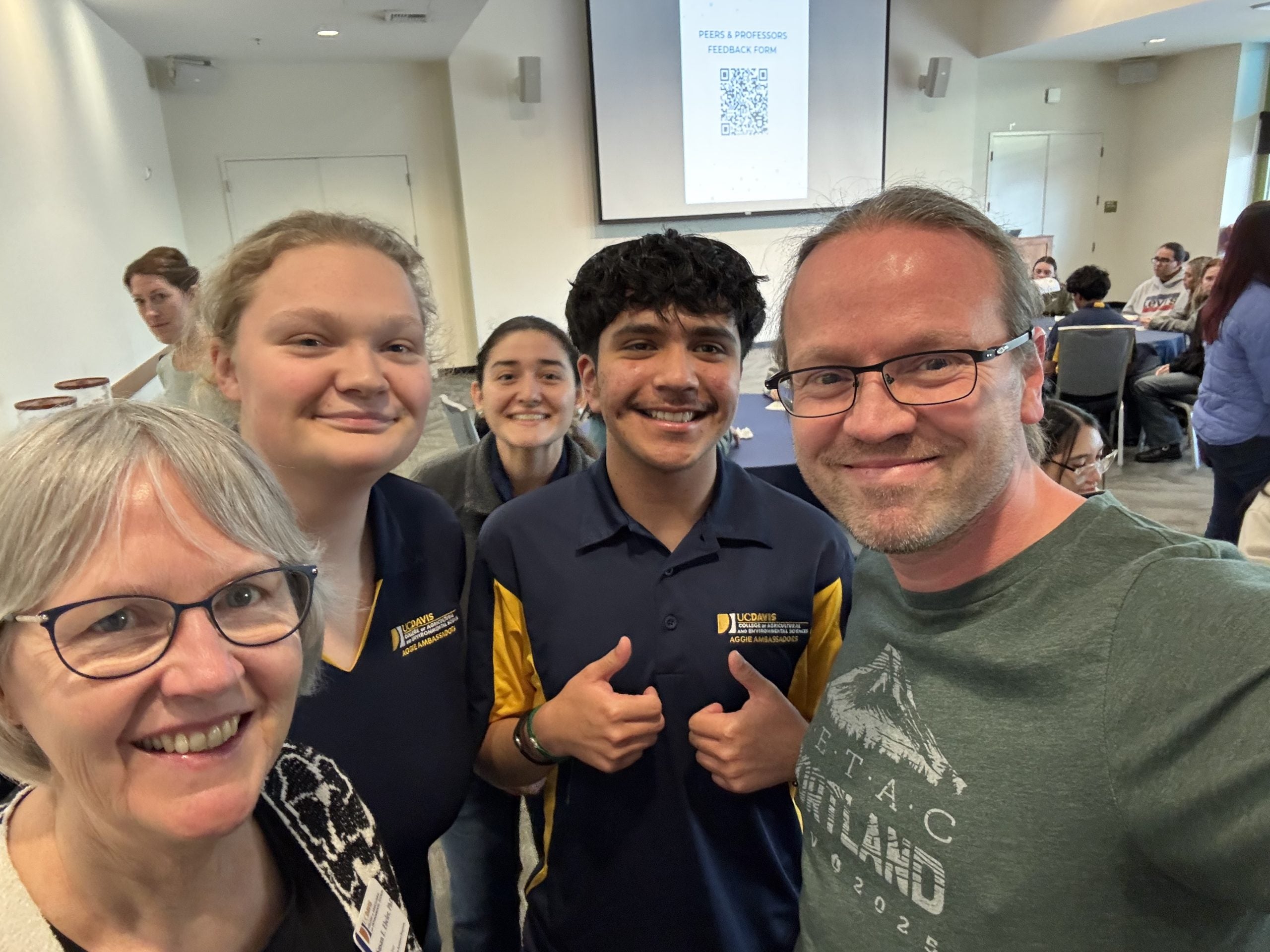
Sascha joined UC Davis’s Aggie Jumpstart and Aggie Ambassadors organizations for a student-faculty networking mixer at the Student Community Center, sharing insights on environmental toxicology research, career pathways, and personal advice with first-generation and low-income CAES students. The event brought faculty and students together in an informal roundtable setting designed to spark mentorship and open doors to new academic opportunities.
New paper is out – Helping Beekeepers Fight Mites Through More Effective Treatments

UC Davis Assistant Professor Sascha Nicklisch, left, and USDA-ARS research entomologist Julia Fine stand with bee hives. The duo partnered to investigate a treatment that targets varroa mites without harming honey bees.